
If you’ve been thinking about upgrading your home or office windows, smart glass is probably on your radar. It’s one of those technologies that sounds futuristic but is actually very much here, very much available, and becoming more affordable every year.
Thank you for reading this post, don't forget to subscribe!But before you call a contractor or start comparing quotes, it helps to understand what smart glass installation actually involves. What goes into the process? How long does it take? What should you watch out for?
This guide walks you through everything — from how smart glass works to what the installation day looks like, and what questions to ask before signing any contract.
What Is Smart Glass and Why Are People Installing It?
Smart glass, also called switchable glass or electrochromic glass, is a type of glass that can change its transparency on demand. At the flip of a switch, press of a button, or tap on your phone, it shifts from clear to frosted — or anywhere in between.
There are a few different types, but the most common ones you’ll come across are:
PDLC film-based glass — This uses a polymer dispersed liquid crystal film. When electricity runs through it, the crystals align and the glass becomes clear. When the power is off, the glass turns frosted or opaque.
Electrochromic glass — This type changes slowly, tinting to block sunlight rather than going fully opaque. It’s popular in commercial buildings and skylights.
SPD glass — Suspended particle devices give you precise control over how much light passes through. It’s common in high-end residential and automotive applications.
People install smart glass for privacy, energy savings, aesthetics, and convenience. Conference rooms use it instead of blinds. Bathrooms use it to replace curtains. Home offices use it to create separation without building walls.
How Smart Glass Installation Works
Smart glass installation is not a simple DIY weekend project. It’s more involved than swapping out a regular window pane. Here’s a realistic picture of what the process looks like.
Site Assessment and Measurement
Before anything gets ordered or installed, a professional will come out to measure the space and assess the site. This step matters more than most people realize. The dimensions have to be exact, the electrical access needs to be nearby, and the existing window frame needs to be compatible with the new glass unit.
If you’re installing smart glass film on existing windows rather than replacing the entire pane, the assessment is simpler. But full smart glass panel installations require more detailed planning.
Electrical Requirements
Here’s something a lot of people don’t think about upfront — smart glass needs power. It’s not like regular glass that just sits there. PDLC glass, for example, needs a low-voltage power supply to stay in its clear state.
This means an electrician often needs to be involved, especially if there isn’t already an outlet or wiring near the window. Running wires through walls, installing transformers or controllers, and connecting the system to a switch or smart home hub all adds to the installation scope.
If you’re integrating with a smart home system like Google Home, Amazon Alexa, or Apple HomeKit, the setup becomes a bit more technical. Not impossible — just something to plan for.
The Installation Process Itself
For a full smart glass panel installation, the process typically involves:
Removing the existing glass pane or window unit. Installing the smart glass panel into the frame. Connecting the electrical wiring to the glass. Testing the switching function before sealing everything up. Finishing the edges and framing to match the surrounding wall or window trim.
For smart glass film installation, the process is different. The adhesive switchable film gets applied directly to your existing glass surface. It’s connected to a power source, and the film itself does the work. This option is cheaper and faster, though the quality and lifespan differ from purpose-built smart glass.
Smart Glass Installation Costs: What to Expect
Pricing is often the first question people ask, and it’s also the one with the widest range of answers.
Cost of Smart Glass Panels
For full smart glass panel installation, you’re generally looking at anywhere from $50 to $150 per square foot, depending on the glass type, brand, and supplier. That’s just for the glass itself. Installation labor, electrical work, and any custom framing can add significantly to the total.
A standard bathroom window smart glass installation might run $500 to $1,500 total for a small space. A large conference room wall could cost $10,000 to $40,000 or more.
Cost of Smart Film Installation
Smart film applied to existing glass is the more budget-friendly route. The film itself often costs $25 to $60 per square foot. Professional installation adds to that, but the total is still usually much lower than a full glass replacement.
The trade-off is that smart film doesn’t last as long, can peel or bubble over time, and may not perform as well in terms of clarity or switching speed.
Factors That Affect the Total Cost
The size of the area you’re covering is the biggest factor. But others include:
The type of smart glass or film you choose. The complexity of the electrical setup. Whether you need a new switch, remote, or app-based controller installed. The location and difficulty of access. Custom shapes or sizes that require special manufacturing.
Always get multiple quotes. The range between contractors can be significant, and understanding what’s included in each quote helps you make a fair comparison.
Choosing the Right Installer
This is where a lot of smart glass projects go sideways. Smart glass installation is a niche skill, and not every general contractor or window installer has experience with it.
Look for Specialized Experience
When interviewing contractors, ask specifically about their experience with smart glass or switchable glass. Ask how many projects they’ve completed. Ask if they can share photos or connect you with past clients.
A contractor who has done twenty smart glass installations is going to handle wiring challenges, frame gaps, and film bubbling much better than someone doing their first one.
Check Their Electrical Credentials
Because smart glass installation almost always involves low-voltage wiring, make sure the installer either has electrical credentials or works with a licensed electrician. This matters for safety and for building permits, which may be required depending on your local regulations.
Ask About Warranties
Good installers stand behind their work. Ask about the warranty on both the product and the installation labor. Smart glass from reputable manufacturers typically comes with a five to ten year product warranty. Installation warranties vary more widely.
Smart Glass for Different Spaces
The installation process and considerations vary depending on where you’re installing.
Residential Bathrooms
Bathrooms are one of the most popular spots for smart glass installation in homes. Instead of frosted glass that’s always opaque or a shower curtain, smart glass lets you have a clear, open look that switches to full privacy with one touch.
In bathrooms, moisture is a concern. Make sure the product you choose is rated for humid environments. The electrical connections also need to be properly sealed and protected.
Home Offices and Living Areas
Room dividers, glass partitions, and even exterior windows in home offices benefit from smart glass. You can create a private work environment without sacrificing the open feel of your space.
Commercial Offices and Conference Rooms
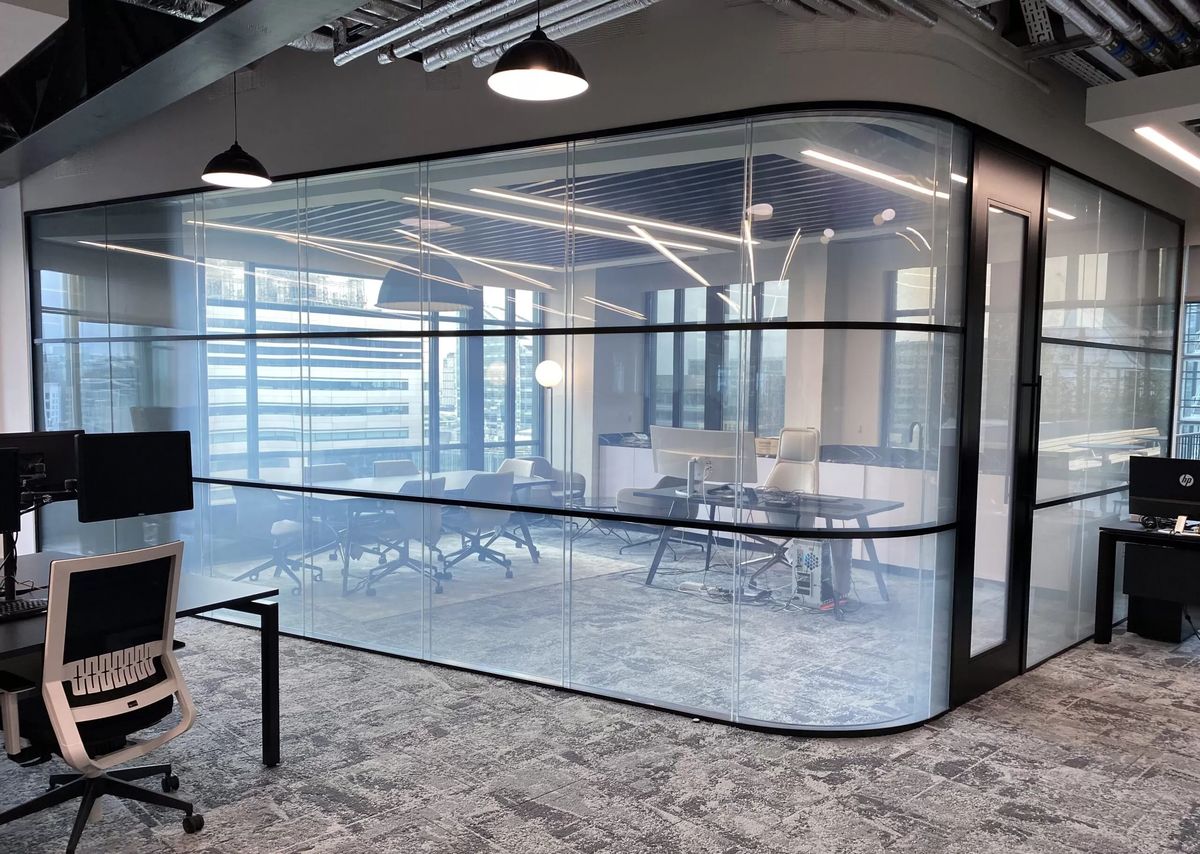
This is the biggest market for smart glass installation. Glass-walled conference rooms that switch from transparent to opaque for meetings are a staple in modern offices. They look great, they’re functional, and they eliminate the need for blinds or curtains that collect dust and look dated.
Commercial installations are usually larger in scale and often integrate with building automation systems. The planning phase is longer and the installation is more complex, but the results are impressive.
Storefronts and Retail Spaces
Retail stores use smart glass in display windows to control visibility during setup, create dramatic reveals, or manage sunlight and glare. If you’re installing smart glass in a storefront, UV protection ratings matter — you don’t want merchandise fading under strong sunlight.
Common Problems With Smart Glass Installation (and How to Avoid Them)
Every technology has its pitfalls, and smart glass is no exception. Being aware of common issues helps you avoid them.
Hazy or Cloudy Appearance
Some smart glass products have a slight haze even in their clear state. This is more noticeable in certain lighting conditions. If clarity is important to you, ask to see a sample in person before committing to a product.
Slow Switching Speed
Lower-quality PDLC products can take a couple of seconds to switch from opaque to clear. If you’re using it for privacy in a bathroom or conference room, this is usually fine. But if instant switching matters, it’s worth paying for a better product.
Wiring Visibility
Thin wires running along window frames can be visible if the installation isn’t done cleanly. Ask your installer how they plan to hide or minimize the appearance of wiring. In some cases, wires can be run through the wall. In others, they’re surface mounted and need to be painted or covered with a trim piece.
Film Peeling or Delamination
For smart film installations, improper surface preparation is the most common cause of peeling. The glass needs to be completely clean and free of any dust, oil, or residue before the film goes on. A good installer will take their time with this step. A rushed one might skip it.
Maintaining Your Smart Glass After Installation
Smart glass is relatively low maintenance, but a few simple habits will keep it looking great and functioning properly.
Clean the glass the same way you’d clean any other window — a soft cloth and a non-abrasive cleaner. Avoid anything with ammonia if you have a film installation, as it can degrade the adhesive over time.
Check the controller and wiring connections periodically. If the glass starts switching inconsistently or not at all, the issue is usually electrical — a loose connection, a failing transformer, or a controller that needs resetting.
Keep the manufacturer’s warranty information and your installer’s contact details somewhere accessible. If something goes wrong in the first few years, you’ll want to address it quickly before a small issue becomes a bigger one.
Is Smart Glass Installation Worth It?
For the right application, absolutely. It’s a genuinely useful technology that solves real problems — privacy without curtains, light control without blinds, open office design with on-demand separation.
The investment makes the most sense when you’re renovating anyway, when the space truly benefits from the switching function, and when you’re working with a qualified installer who understands the product.
It’s less compelling as a pure novelty purchase. If you install it somewhere you’ll rarely use the switching function, you’ve essentially paid a premium for glass that looks like regular glass most of the time.
Think about how you’ll actually use it day to day. If the answer is “constantly,” it’s probably worth it.
Frequently Asked Questions About Smart Glass Installation
How long does smart glass installation take?
For a single window or bathroom panel, installation typically takes half a day to a full day. Larger commercial projects can take several days to weeks depending on scope. The electrical work sometimes adds time if significant wiring is needed.
Can smart glass be installed in existing window frames?
Yes, in many cases. A professional will assess whether the existing frame can support the new glass unit. If the frame is in good condition and the dimensions are compatible, full glass replacement is possible without replacing the entire window assembly.
Does smart glass work during a power outage?
This depends on the type. PDLC smart glass is typically opaque when unpowered and clear when powered. So during a power outage, it would stay in its frosted state. Electrochromic glass holds its last state without power, so it doesn’t change until power is restored.
Is smart glass installation a DIY project?
For smart film on small surfaces, a careful DIYer can attempt it. But for full smart glass panel installation with electrical connections, professional installation is strongly recommended. Mistakes in sizing, sealing, or wiring are costly to fix.
How long does smart glass last?
Quality smart glass panels typically last 10 to 20 years with proper care. Smart film has a shorter lifespan, usually 5 to 10 years depending on the brand, usage, and environment.
Is smart glass safe?
Yes. Smart glass uses low-voltage electrical current, which is safe for residential and commercial use. It meets standard building codes in most regions. The film or coating is sandwiched between glass layers, so there’s no direct contact with the electrical components.
Can smart glass reduce energy bills?
Electrochromic smart glass can meaningfully reduce cooling costs by blocking solar heat gain. PDLC glass has less impact on energy since it doesn’t block heat as effectively. If energy savings are a priority, electrochromic is the better choice.
Final Thoughts
Smart glass installation is one of those home and office upgrades that people rarely regret when done right. The key is going in with clear expectations — understanding the cost, the process, the maintenance, and how the technology actually works.
Take your time choosing a product and an installer. Ask questions. Get multiple quotes. See samples before committing.
When everything comes together — the right glass, the right installation, the right application — it’s genuinely impressive. And unlike a lot of design trends, it’s also functional. That combination of form and function is what makes smart glass worth serious consideration for your next renovation or build.